English
 Deutsch
Emulsified Mixer
Cat:Multi-Shaft Mixer
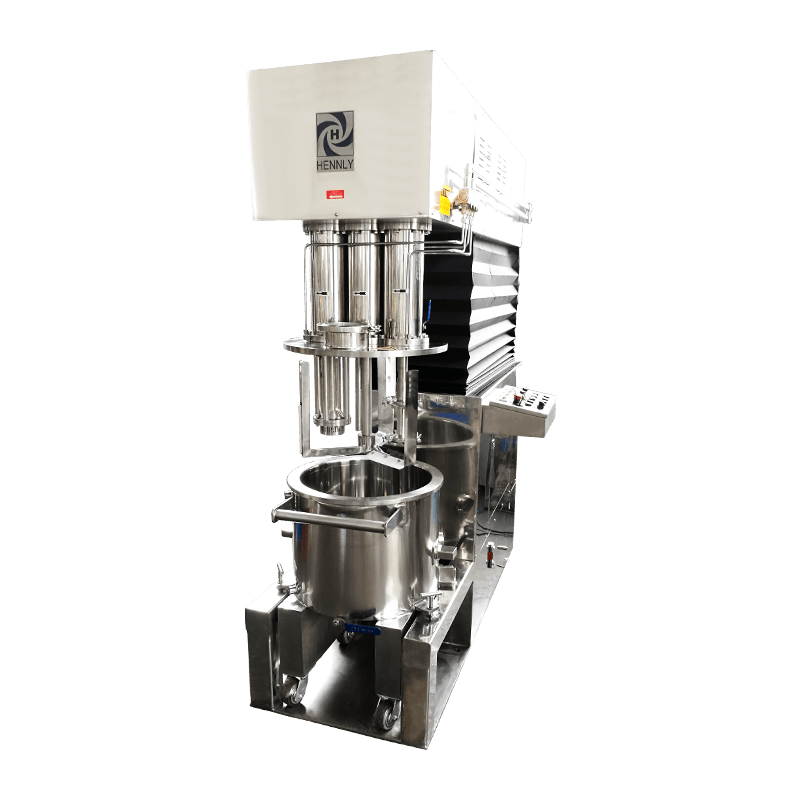
The high-shear emulsifying head of the emulsified mixer offers various options depending on material needs, such as an open-type stator head, two-way ...
See DetailsIn modern processing industries, Industrial Powder Mixing Equipment serves as the cornerstone for ensuring product quality consistency. It is not merely about putting two or more powders together; it involves using mechanical force to overcome friction, cohesion, and gravity between material particles, achieving a random and highly uniform distribution of different components in space.
* Macro-mixing: Handles the movement of large quantities of material to ensure consistent proportions across different regions of the container.
* Micro-mixing: Uses shear force to break down agglomerates, achieving component distribution at the micron level.
* Protection of Material Integrity: Minimizes physical damage to fragile particles or destruction of crystal structures during the mixing process.
To optimize the operational efficiency of Industrial Powder Mixing Equipment, key physical parameters must be considered, as they directly determine the difficulty of the mixing process:
| Physical Parameter | Impact on Mixing | Recommended Measures |
| Particle Size Distribution | Large differences in particle size easily lead to segregation (layering). | Use equipment with forced agitation mechanisms. |
| Bulk Density | When density differences are significant, heavy powders tend to sink. | Increase mixing speed or enhance convection intensity. |
| Flowability | Cohesive powders clump easily, while free-flowing powders segregate easily. | Cohesive powders require high-speed choppers. |
| Moisture Content | High moisture increases adhesion and hinders material flow. | Select equipment with anti-stick linings or heating jackets. |
| Electrostatic Properties | Fine powders easily adsorb onto container walls or agitator blades. | Equipment must be reliably grounded or surface-treated for anti-static. |
In industrial production, choosing the right Industrial Powder Mixing Equipment depends on the physical characteristics of the materials and the uniformity requirements of the process. Equipment is mainly divided into four categories based on mechanical motion and mixing mechanisms:
These devices use internal agitator blades (such as ribbons or plows) to force the material into a circular flow.
* Ribbon Blender: The most common type of Industrial Powder Mixing Equipment. Its inner and outer ribbons push materials in opposite directions, creating complex radial and axial convection. Suitable for powder-to-powder and powder-to-liquid mixing.
* Ploughshare Mixer: Shaped like an agricultural plow, it flings material into a "turbulent" state at high speeds. For materials prone to clumping, high-speed choppers are usually installed on the side to shear lumps.
These devices rotate the container itself, causing the material to constantly fall, roll, and fold under the action of gravity.
* V-Blender: Composed of two cylinders connected in a V-shape. As the container rotates, the material is continuously split and merged, ideal for free-flowing dry powders with similar particle sizes.
* Double Cone Mixer: Operates gently. Since there are no internal agitator blades, it greatly reduces wear on fragile particles and allows for very clean discharge with no dead zones.
When dealing with ultra-fine powders or the need to uniformly disperse micro-additives into a main material, ordinary convective mixing is insufficient.
* Principle: Utilizes a high-speed rotor to generate massive mechanical shear force. This type of Industrial Powder Mixing Equipment overcomes van der Waals forces between particles to prevent micro-powders from clumping into spheres.
Uses airflow to suspend the powder.
* Principle: By blowing controlled airflow through the bottom, powder particles enter a "fluidized" state. In this state, the collision frequency between particles is extremely high, and mixing is completed very quickly (usually within seconds to minutes) with minimal physical damage to the particles.
| Equipment Type | Mixing Principle | Typical Mixing Cycle | Recommended Filling Rate | Shear Intensity | Material Damage |
| Ribbon Blender | Mechanical Convection | 5 - 15 minutes | 40% - 60% | Medium | Medium |
| Ploughshare Mixer | Turbulence + Shear | 3 - 8 minutes | 30% - 70% | High (with chopper) | Higher |
| V-Blender | Gravity Diffusion | 10 - 20 minutes | 40% - 50% | Low | Extremely Low |
| Double Cone Mixer | Gravity Diffusion | 10 - 25 minutes | 40% - 60% | Low | Extremely Low |
| Fluidized Bed Mixer | Airflow Suspension | 0.5 - 3 minutes | 20% - 50% | Extremely Low | Extremely Low |
Selecting Industrial Powder Mixing Equipment cannot be decided by capacity alone. Industrial applications require high repeatability and stability under complex conditions. Here are the four technical dimensions that determine performance:
For Industrial Powder Mixing Equipment, filling it to the brim is not ideal.
* Optimal Range: Most convective mixers work best at 40% - 60% filling. Exceeding 70% restricts the movement space at the top, creating dead zones. Below 20%, an effective convective cycle cannot form.
Contact material treatment is vital based on industry standards:
* Industrial Grade: Usually 304 stainless steel with sandblasted or passivated surfaces.
* Food/Pharma Grade: Must use 316L stainless steel with mirror polishing (Ra < 0.4μm) to prevent powder sticking and ensure sanitation.
* Shaft Seals: Air purge seals are superior to traditional packing, preventing fine powders from entering bearings.
* Explosion-Proof: For flammable powders (like aluminum or starch), motors and controls must meet ATEX or equivalent standards.
| Technical Indicator | Chemical/Construction | Food Processing | Pharma/Fine Chem |
| Main Material | Carbon Steel / 304 SS | 304/316 SS | 316L SS |
| Surface Finish (Ra) | No strict requirement | < 0.8 μm | < 0.4 μm (Mirror) |
| Sealing Method | Mechanical Packing | Food-grade Skeleton | Pneumatic Floating |
| Mixing Uniformity (CV) | < 5% | < 3% | < 1% |
High-performance Industrial Powder Mixing Equipment relies on several precision-engineered subsystems.
* Double Ribbon: Opposite ribbons create a "back and forth" movement, significantly increasing convective efficiency.
* Ploughshare: Flings material into free space, ideal for adding liquids or breaking up clumps.
* Paddle: Provides lower shear, suitable for materials sensitive to heat or with large density differences.
Rotating at 1500 - 3000 RPM, these are installed on side walls to break up lumps caused by moisture or static.
* Flap Valve: Matches the inner wall contour to achieve "zero dead zone" discharge.
* Full-Length Discharge: The entire bottom opens for rapid unloading, preventing segregation.
Handling API and excipients requires absolute uniformity even at 0.1% ratios. V-shaped mixers are preferred for their ease of cleaning and prevention of cross-contamination.
Focuses on microbial control. Equipment often features quick-opening doors for thorough Clean-In-Place (CIP) processes when switching between allergen and non-allergen formulas.
For battery materials or ceramics, Industrial Powder Mixing Equipment often features Tungsten Carbide coatings or ceramic liners to prevent metal contamination.
* Bearings and Seals: Check weekly to ensure air purge pressure is constant.
* Blade Wear: The gap between the blade and wall should remain between 3mm - 5mm to avoid dead zones.
| Dimension | Adjustment | Expected Effect |
| Feeding Order | Bulk material first, then micro-additives. | Faster uniformity. |
| Mixing Time | Find the critical point to stop. | Prevents secondary segregation. |
| Speed Control | Use VFD for slow start/fast mix. | Protects motor and reduces dust. |
Q: Why does the material temperature rise during mixing?
A: This is usually due to excessive mixing time or high tip speeds causing frictional heat. Consider adding a cooling jacket.
Q: How do I verify mixing uniformity?
A: Take 10 samples from different locations (top, middle, bottom). When the Relative Standard Deviation (RSD) is < 5%, the mix is generally considered uniform.
Q: What is the best equipment for ultra-fine airborne powders?
A: A vacuum-loaded, fully enclosed system with air-flow mixing or precision air-purge seals is recommended to eliminate dust leakage.
The high-shear emulsifying head of the emulsified mixer offers various options depending on material needs, such as an open-type stator head, two-way ...
See Details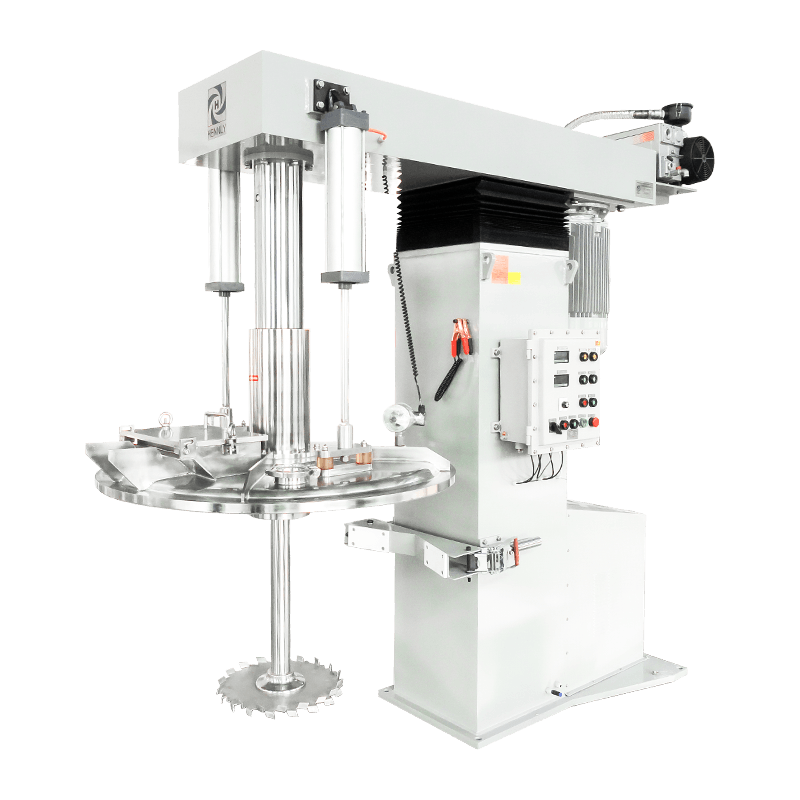
The vacuum raised and lowered disperser is a newly optimized product based on the combination of a vacuum disperser and a scraper disperser. it operat...
See Details
Feature: The number of blades can be customized The finger blades planetary mixer has stirring paddles composed of multiple blades, also called foldin...
See Details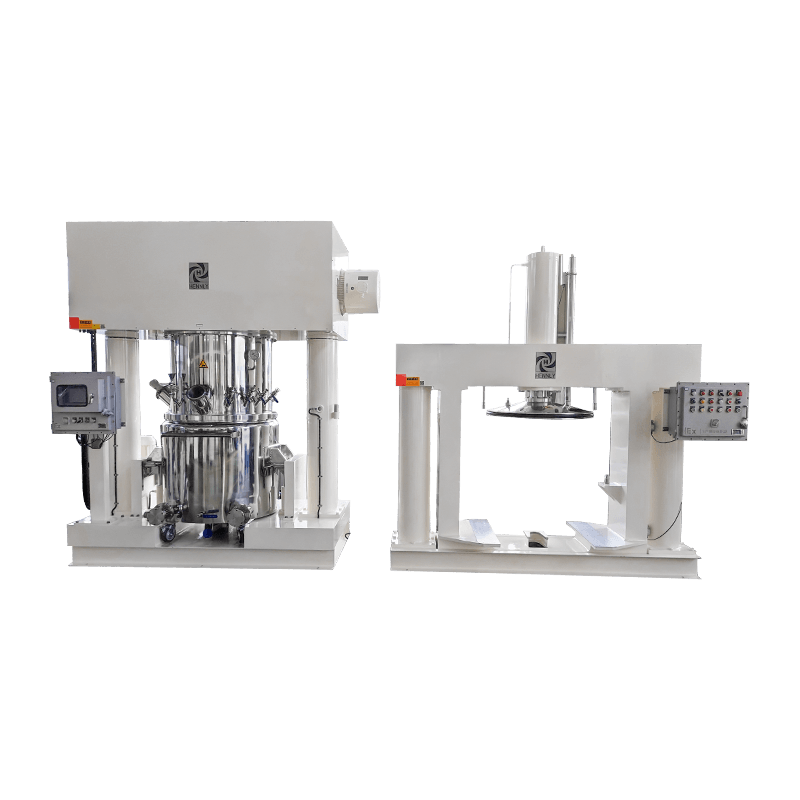
The claw blades planetary disperser is based on the claw-type double planetary mixer, with the addition of one or two high-speed dispersion units. Thi...
See Details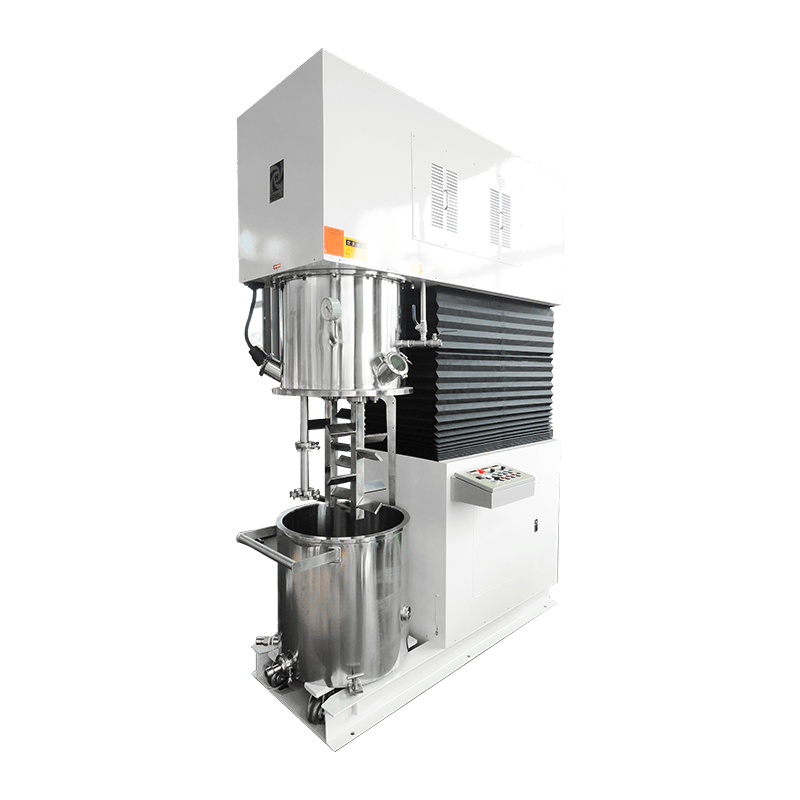
The finger blades planetary disperser is built on the finger-type double planetary mixer, with one or two additional high-speed dispersion units. Nant...
See Details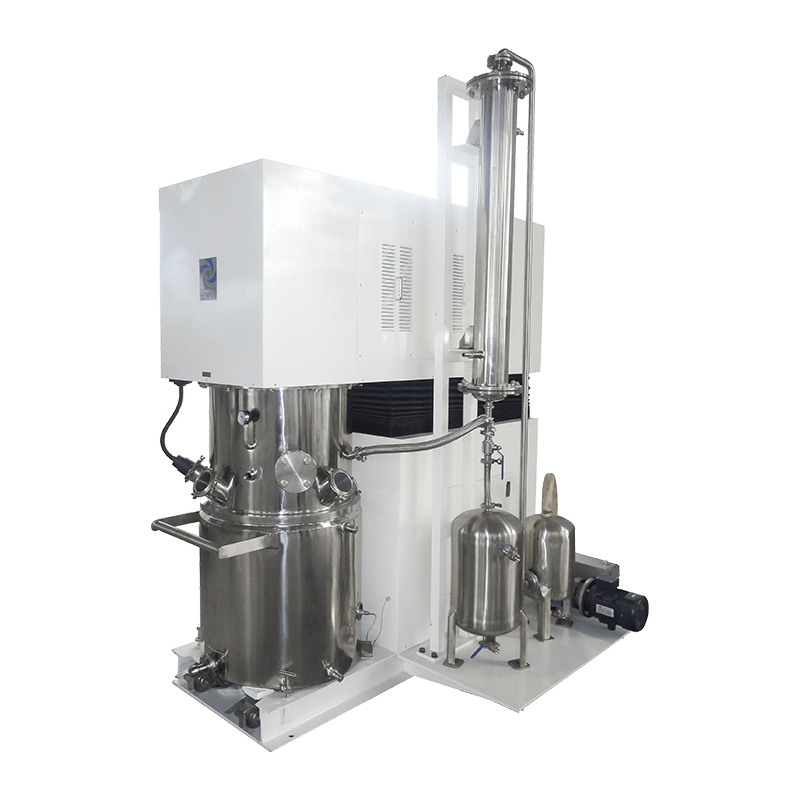
In addition to meeting the various production processes, Hennly mixer also can recycle volatile solvents, avoiding environmental pollution and reducin...
See Details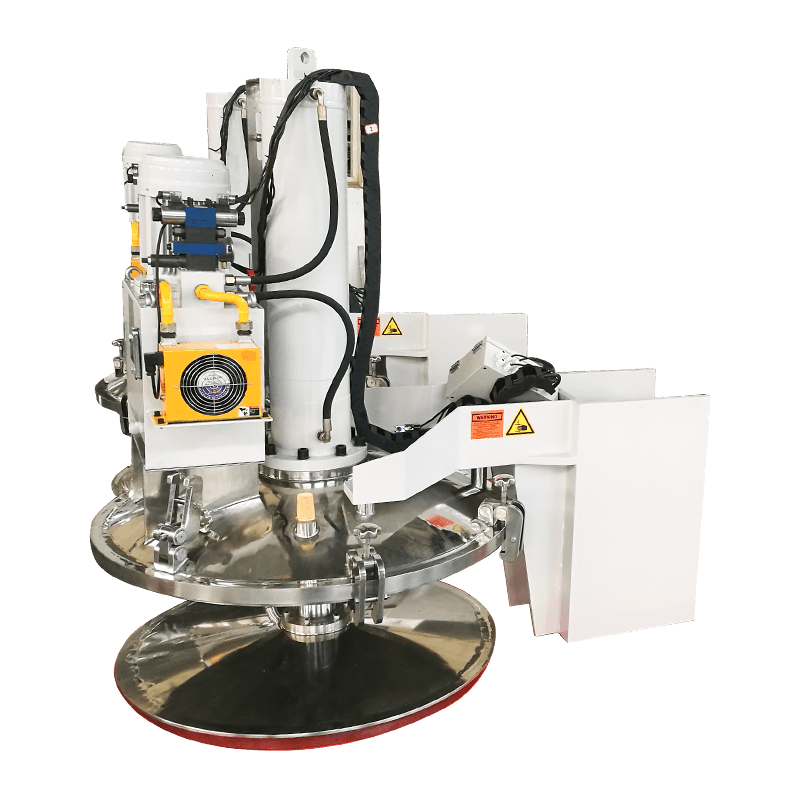
The main features of this press is small footprint, space saving and can be rotated 360°.lt can be used for discharging, and also can be used for filt...
See DetailsExperienced employees & experts are Always At Your Service to provide you with satisfactory products & professional instruction on technical problem solutions.

Add: No.36 Dragon Road, Technology Park, Qidong City, Jiangsu Province

Phone: +86-13806285652

Tel:+ 86-0513-83635488

Fax:+ 86-0513-83635488

E-mail: andyli@hennly.com