English
 Deutsch
Standard Mixer
Cat:Multi-Shaft Mixer
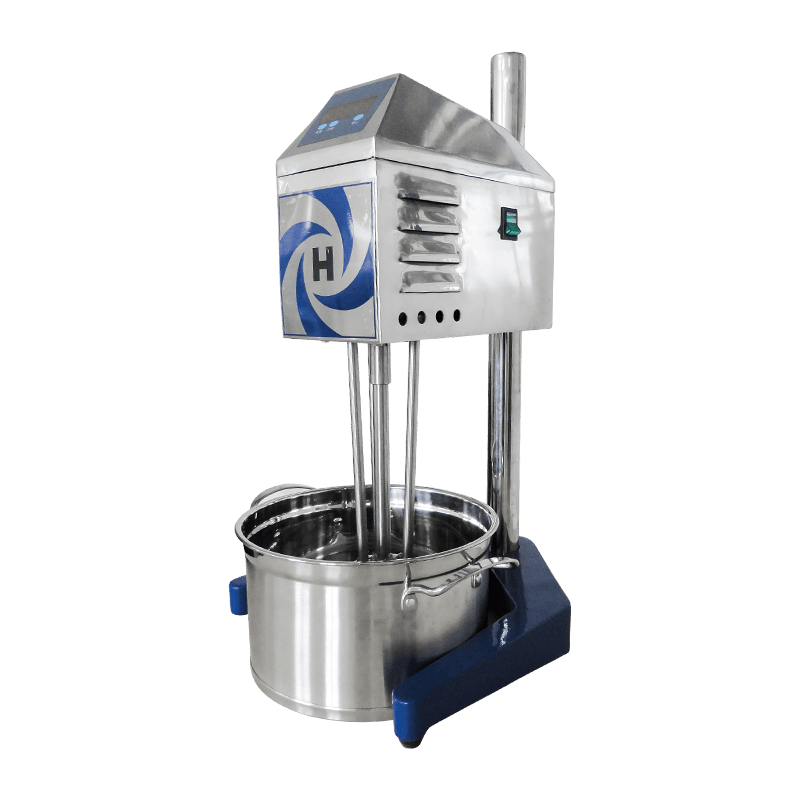
The standard mixer is suitable for most products with material viscosities under 500,000 CPs. This machine emphasizes material crushing and emulsifica...
See DetailsIn the production of fine chemicals, lithium battery slurries, and polymer composites, the Double Planetary Mixer serves as the critical equipment for handling high-viscosity Non-Newtonian Fluid. Because the apparent viscosity of a Non-Newtonian Fluid fluctuates significantly based on the Shear Rate, understanding the distribution of the shear field within the mixing chamber is essential for optimizing product performance, controlling particle size distribution, and improving production efficiency. This technical analysis explores the advantages and limitations of shear rate distribution from a fluid dynamics perspective.
The defining characteristic of a Double Planetary Mixer is its compound motion: the agitator blades perform a Revolution around the center line of the vessel while simultaneously undergoing a high-speed Rotation around their own axes.
For a Non-Newtonian Fluid, viscosity is not a constant. In a Pseudoplastic Fluid, viscosity decreases as the Shear Rate increases (shear thinning), whereas the opposite occurs in a Dilatant Fluid. The Double Planetary Mixer creates a dynamic shear field that evolves over time through this complex trajectory. The calculation of Shear Rate no longer depends solely on the rotational speed of the blades but also on the Clearance between the blades and the tank wall, as well as between the blades themselves.
High Spatial Coverage and Elimination of Dead Zones
When processing extremely high-viscosity Non-Newtonian Fluid, traditional mixers often suffer from "cavern" effects near the impeller due to the Yield Stress of the fluid, leaving the peripheral material stagnant. The Double Planetary Mixer ensures that the blade path covers the entire internal volume of the vessel through its orbital revolution. This means the Shear Rate distribution is not confined to the axial region but is forced upon every part of the material, effectively solving the flow stagnation issues common in high-viscosity systems.
Intensified Local High-Shear Zones
The peak Shear Rate in the equipment typically occurs at the Wall Clearance between the blade edge and the vessel interior. Since clearances are usually maintained between 3mm and 7mm, this confined space generates immense local shear stress under the combined effect of rotation and revolution. For Non-Newtonian Fluid systems requiring the breakdown of Agglomerates, these high-shear zones are critical for achieving microscopic homogenization.
Dynamic Shear Fields for Enhanced Mixing
The Shear Rate distribution generated by a Double Planetary Mixer is time-variant. Material periodically passes through high-shear zones (blade clearances) and lower-shear zones (the central areas). This alternating shear intensity is particularly beneficial for Thixotropic Fluid, as it disrupts the internal structure of the fluid and encourages rapid flow transition, significantly shortening the mixing cycle.
Spatial Non-Uniformity of Shear Rate
Despite high spatial coverage, the Shear Rate gradient within a Double Planetary Mixer is extremely sharp. The shear rate near the blade tips can be several orders of magnitude higher than in the center. For fluids with high Shear Sensitivity, such as certain polymer biomaterials or precision adhesives, excessively high local shear rates can cause molecular chain scission or material instability, leading to irreversible performance degradation.
Viscous Dissipation and Thermal Effects
Since Shear Rate is directly linked to mechanical energy input, processing high-solid-content Non-Newtonian Fluid generates intense Viscous Dissipation in high-shear zones, which converts to heat. Because the heat transfer surface area of a Double Planetary Mixer is relatively limited, this uneven shear distribution can lead to local Hot Spots. These temperature spikes alter the rheological properties of the fluid and may even trigger undesirable side reactions.
Lag in Adaptation to Rheological Shifts
When the characteristics of a Non-Newtonian Fluid change drastically during a reaction (e.g., shifting from low to ultra-high viscosity), a fixed blade geometry may not provide the optimal Shear Rate distribution at all stages. During low-viscosity phases, the shear may be insufficient, while at high-viscosity stages, the massive torque demand might force a reduction in speed, thereby weakening the shear intensity required for micro-dispersion.
To achieve a more ideal Shear Rate distribution, modern Double Planetary Mixer designs incorporate several improvements:
Helical Twist Blade Design: Helical blades provide not only radial and tangential shear but also an axial Pumping Effect, which makes the Shear Rate distribution more uniform in the vertical direction.
Dual-speed Control: Independent control of revolution and rotation speeds allows for the adjustment of the Speed Ratio to customize the shear field intensity specifically for the rheological profile of the target Non-Newtonian Fluid.
Integration with High Speed Dispersers: Adding independent high-speed disperser shafts to the planetary system provides ultra-high Shear Rate local processing on top of the global mixing, achieving multi-stage dispersion.
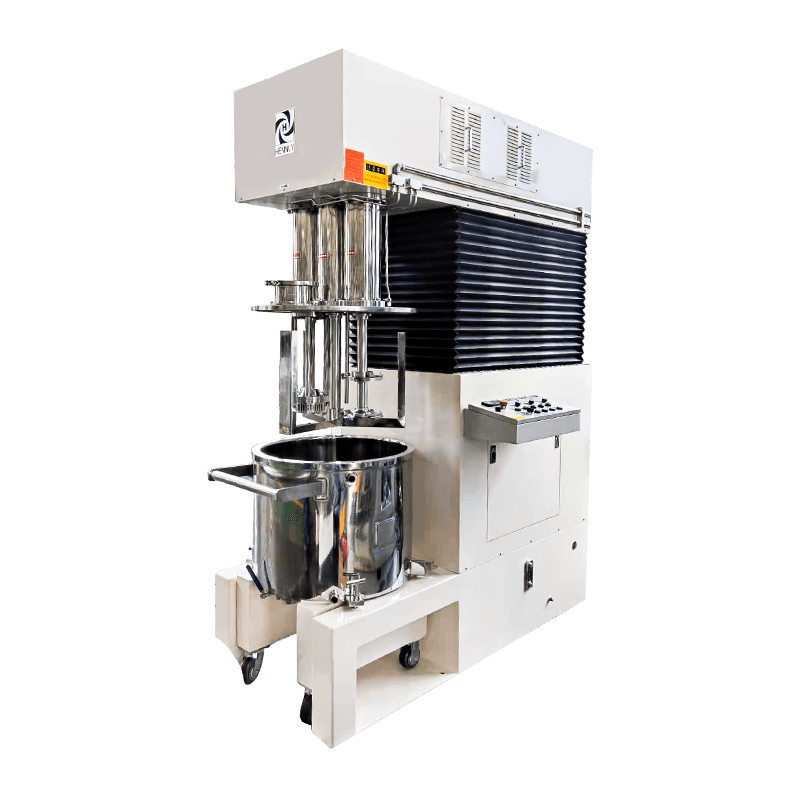
The standard mixer is suitable for most products with material viscosities under 500,000 CPs. This machine emphasizes material crushing and emulsifica...
See Details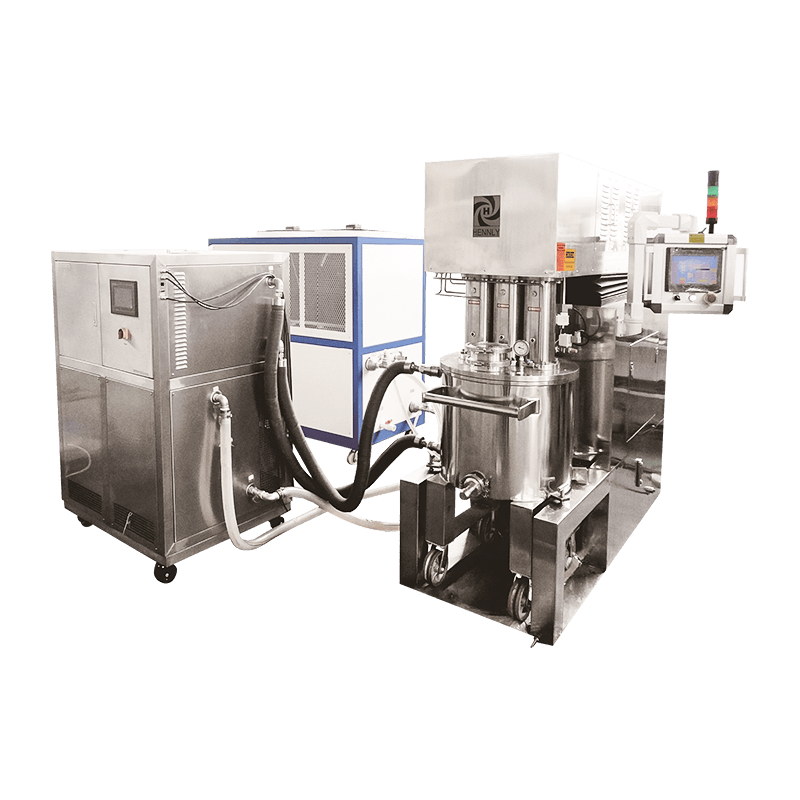
As the power of electronic products increases, the heat generated by components also rises accordingly. Conventional soldering materials and conductiv...
See Details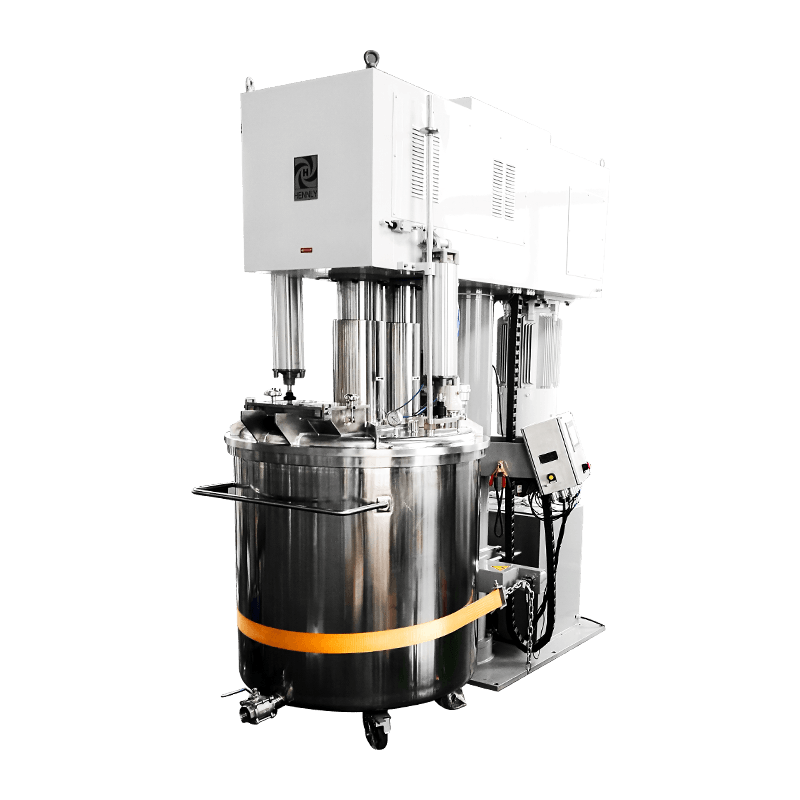
The two-shaft mixer is usually composed of a group of high-speed and a group of low-speed mixers, which can mix different particles in a short time to...
See Details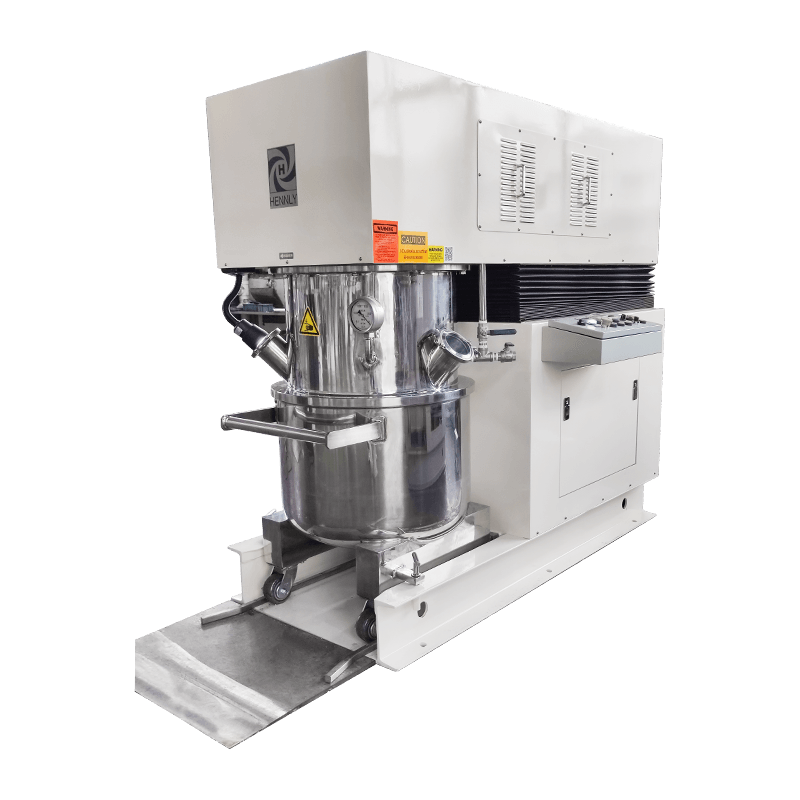
Fea'ture: Hook-type stirring paddle, Special container, High speed The hook planetary mixer consists of two hook-shaped stirring paddles. The upper pa...
See Details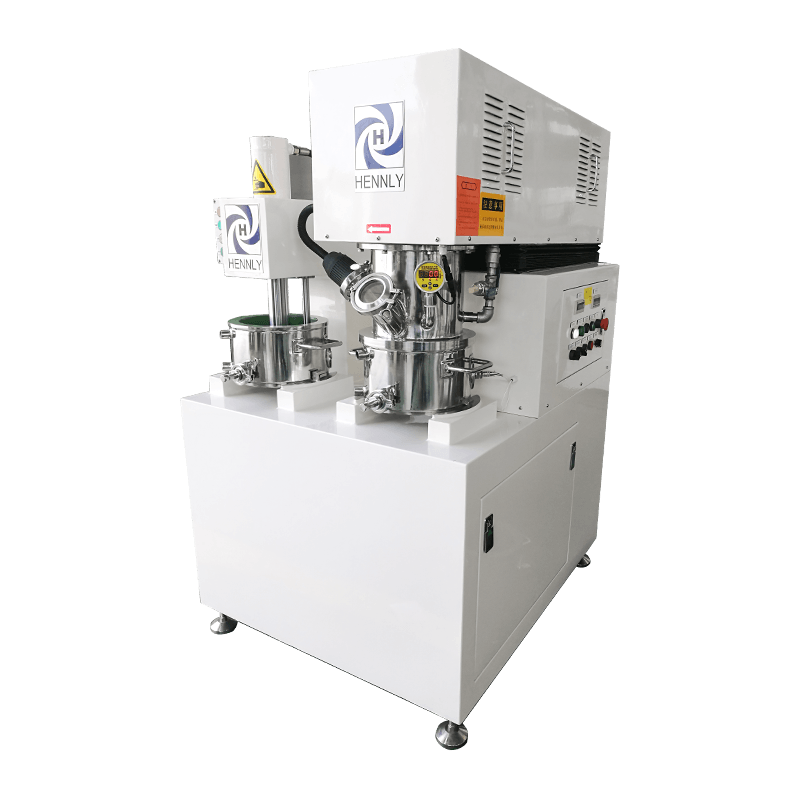
The lab planetary disperser is primarily used for customer's preliminary research or small-scale production. it is available in all mixing types menti...
See Details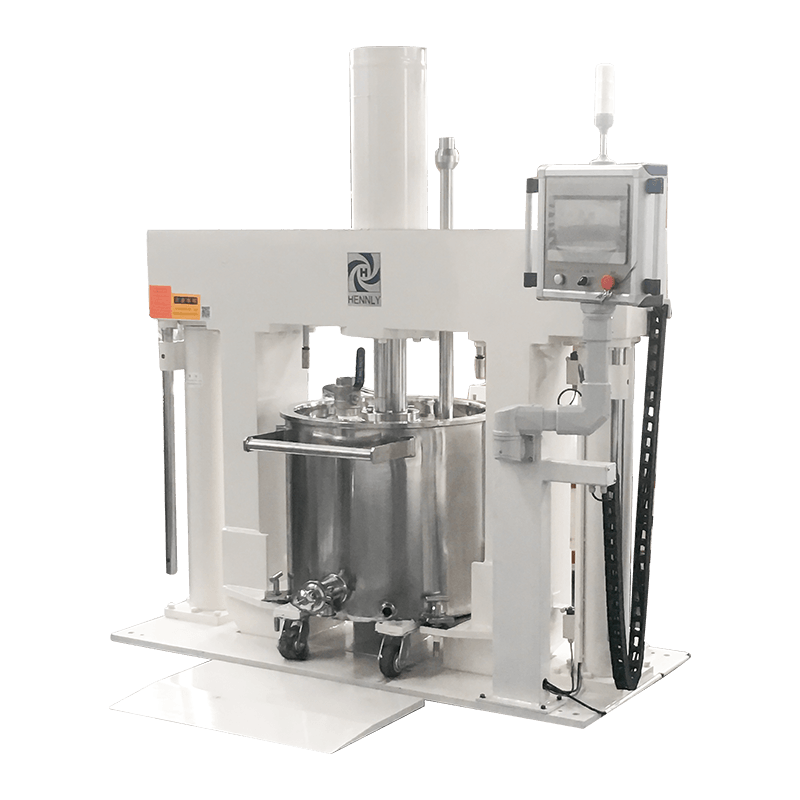
In order to meet the higher value-added product process and achieve zero pollution to the product, we use the servo electric cylinder instead of the t...
See DetailsExperienced employees & experts are Always At Your Service to provide you with satisfactory products & professional instruction on technical problem solutions.

Add: No.36 Dragon Road, Technology Park, Qidong City, Jiangsu Province

Phone: +86-13806285652

Tel:+ 86-0513-83635488

Fax:+ 86-0513-83635488

E-mail: andyli@hennly.com