English
 Deutsch
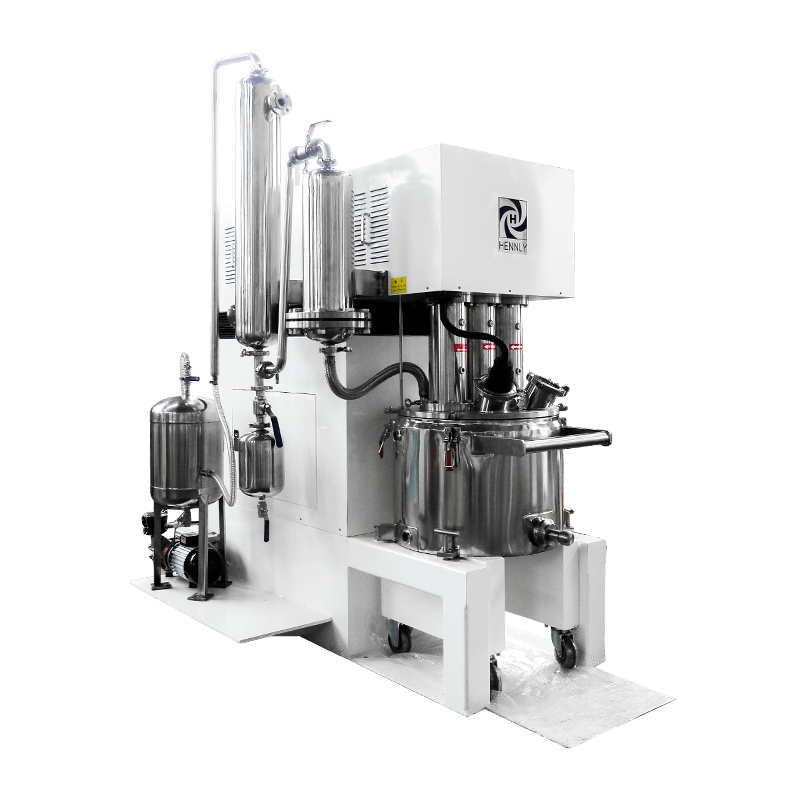
Large Production Capability Mixer
Cat:Multi-Shaft Mixer
In mass production, conventional equipment structures may no longer be suitable. The drive unit is typically fixed directly to the mixing tank. These ...
See DetailsBefore diving into which mixer is superior, we must analyze their underlying mechanical logic. Efficiency depends not only on motor power but also on the agitator's trajectory in space, which determines mixing homogeneity, shear intensity, and heat generation.
A spiral mixer primarily consists of a fixed spiral-shaped hook and a rotating bowl. During operation, the bowl carries the ingredients in a circular motion while the spiral hook rotates on a fixed axis.
The mixing head of a planetary mixer mimics a planetary orbit: the agitator rotates rapidly on its own axis while simultaneously revolving around the center of the mixing bowl.
When dealing with ultra-high viscosity or high-solid-content industrial materials, standard planetary or spiral structures reach their limits. The Triple Planetary Mixer was engineered to provide a thorough mechanical reinforcement.
The following table provides a detailed look at the core parameters of these three mixer types in industrial applications, reflecting their performance under extreme conditions.
| Performance Metric | Spiral Mixer | Standard Planetary Mixer | Triple Planetary Mixer |
| Number of Agitators | 1 (Fixed position spiral hook) | 1-2 (Rotation + Revolution) | 3 (Overlapping trajectories) |
| Viscosity Range | Low to Medium (Dough grade) | Medium (Paste/Cream) | Ultra-High (Paste/Semi-solid/Gel) |
| Material Examples | Pizza/Bread Dough | Cake batter, Cookie dough, Mayo | Battery slurry, Silicone, Adhesives |
| Temperature Control | Excellent (Low friction) | Fair (Moderate friction) | Precise (Vacuum and Cooling jackets) |
| Mixing Dead Zones | Small amount (Center) | Very few | Completely eliminated |
| Energy Input Intensity | Low | Moderate | Ultra-High (High shear force) |
| Speed Range | Narrow (Usually 2 speeds) | Wide (Variable speed) | Very Wide (Precision frequency control) |
When evaluating which is "better," Shear Force is a central metric.
For the spiral mixer, the shear force is gentle and continuous, which is vital for protecting delicate protein chains in dough. If the shear force is too high, the dough can be "overworked," losing its elasticity.
However, in fine chemicals or advanced manufacturing, extremely high shear is required to break down powder agglomerates. The superiority of the Triple Planetary Mixer is evident here. As the three blades sweep through the bowl at high speeds, material is repeatedly rubbed and sheared between the blades themselves and between the blades and the bowl wall.
Another significant difference lies in the design of the mixing bowl.
Spiral: The bowl is part of the drive system and must rotate. This makes sealing difficult, so they are usually used in atmospheric pressure environments.
Planetary: The bowl is typically stationary and interfaces with the mixing head via a lift system.
Triple Planetary Mixer: The bowl is not only stationary but is often designed as a precision-machined heavy-duty pressure vessel. Because the Triple Planetary Mixer handles materials with extreme resistance, the bowl must be locked via hydraulic devices to withstand the intense kinetic energy and pressure changes.
Choosing the "better" mixer involves matching performance to specific industry needs.
In chemical, pharmaceutical, and battery manufacturing, material viscosity grows exponentially.
| Industry Metric | Spiral Mixer | Standard Planetary Mixer | Triple Planetary Mixer |
| Typical Hydration | 45% - 80% | 50% - 75% | N/A |
| Max Shear Rate | Low | Medium | Ultra-High |
| Vacuum Capability | None | Optional (Limited) | Standard (-0.098MPa) |
| Viscosity Limit (cP) | ~50,000 | ~150,000 | 5,000,000+ |
| Batch Capacity Range | 20L - 400L | 5L - 200L | 2L (Lab) - 2000L+ (Production) |
| Temp. Accuracy | Poor | Fair | High (Precision thermal jackets) |
In high-end manufacturing, the Triple Planetary Mixer acts as an integrated reactor.
Eliminating Hot Spots: High-intensity mixing generates heat. The three blades of the Triple Planetary Mixer constantly exchange material positions, keeping temperature variance within 1 degree Celsius when paired with a cooling jacket.
Forced Flow Control: Standard mixers can suffer from "circulation" at high viscosities where the material simply spins with the blade. The Triple Planetary Mixer breaks this flow with intersecting paths.
Adaptability: Blades can be customized (frame-type, twist-type, or finger-type) to meet requirements from mixing and kneading to dispersion.
| Safety Feature | Spiral Mixer | Standard Planetary Mixer | Triple Planetary Mixer |
| Emergency Stop | Standard | Standard | Redundant multi-point |
| Safety Interlock | Flip-top guard | Lift-up cage | Vacuum chamber sensor |
| Overload Protection | Thermal relay | Electronic protection | Smart torque monitoring |
| Explosion Proof | Conventional | Conventional | Optional Ex-proof |
| Operator Level | Basic training | Basic training | Advanced technician |
Q1: Why does my planetary mixer "jump" when kneading dough?
Insight: This is because planetary mixers have a higher center of gravity and the head moves in dual directions. With stiff dough, resistance is high and the kinetic energy isn't released smoothly. Spiral mixers have a lower center of gravity and provide more stable force.
Q2: Can a Triple Planetary Mixer really handle 1 million cP viscosity?
Insight: Yes. 1 million cP is roughly the thickness of heavy toothpaste. The Triple Planetary Mixer uses three blades to "forcefully" rub material between the walls and the blades. It usually includes a bottom scraper to prevent material from sticking to the bowl.
Q3: When should I replace the mixing blades?
Expert Advice: 1. Visual Check: Look for cracks or coating peeling. 2. Gap Measurement: Measure the gap between the blade and the bowl bottom; efficiency drops if the gap increases. 3. Noise: If you hear metal clashing in a Triple Planetary Mixer, stop immediately to check planetary shaft alignment.
Q4: Can a spiral mixer run in reverse?
Insight: Most commercial spiral bowls can reverse. This is used in the early stages to help ingredients incorporate faster or at the end to help peel the dough off the hook.
Q5: Why is "Vacuum" emphasized for the industrial Triple Planetary Mixer?
Insight: When mixing high-viscosity materials like battery slurries, bubbles cause uneven conductivity. In a vacuum, the pressure difference pulls tiny air pockets out of the thick liquid, ensuring uniform density.
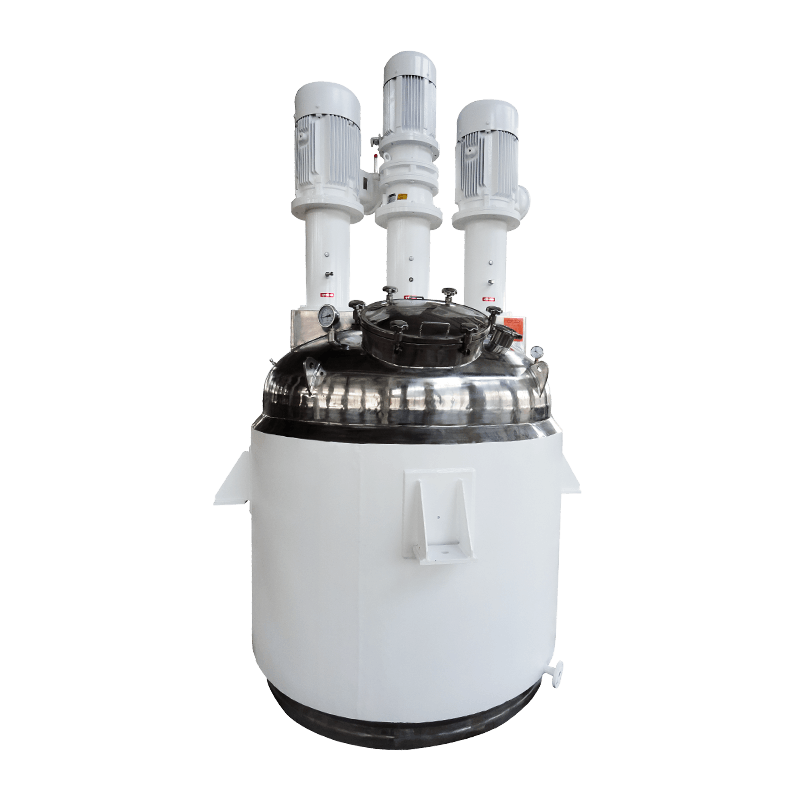
In mass production, conventional equipment structures may no longer be suitable. The drive unit is typically fixed directly to the mixing tank. These ...
See Details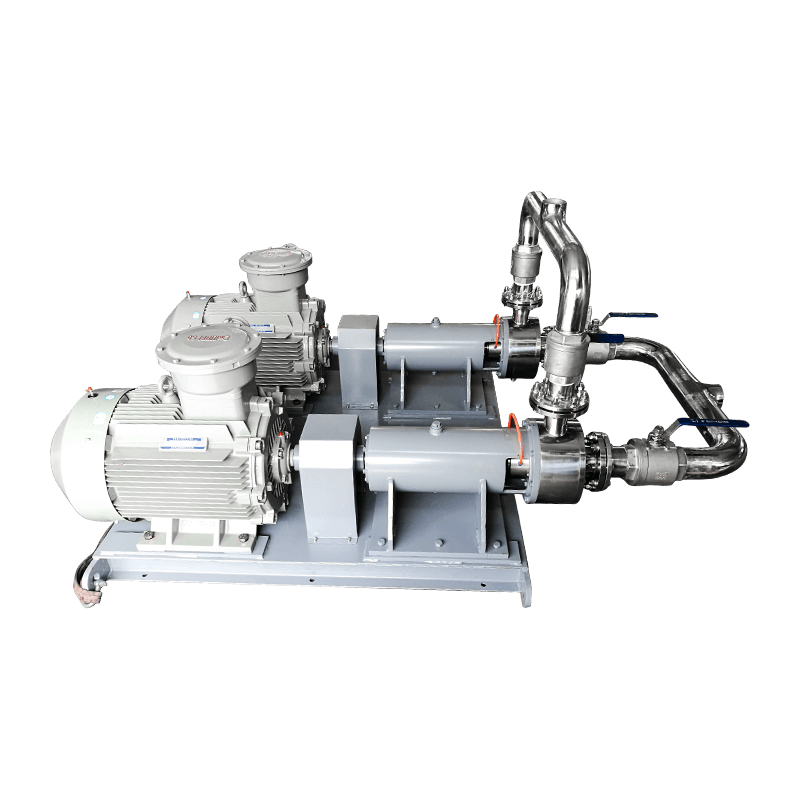
The advantages of grinding pumps include high linear velocity small and adjustable shear gaps, enhanced fluid turbulence. high-quality surface finishi...
See Details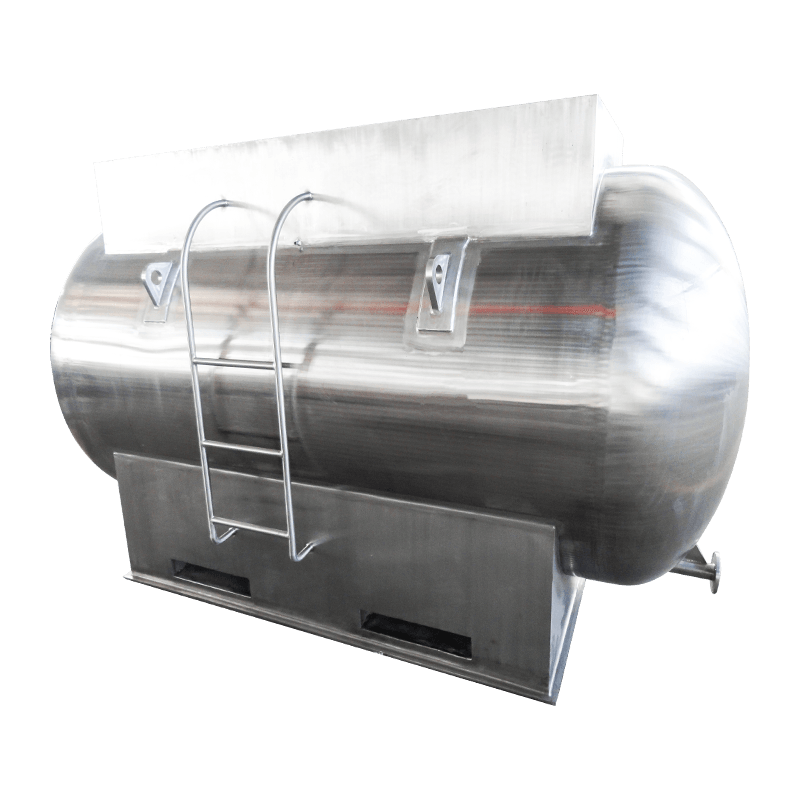
Hennly’s atomization pots are mainly used in the production of tin powder. A furnace is installed on the top of the atomization tank, and molten tin d...
See Details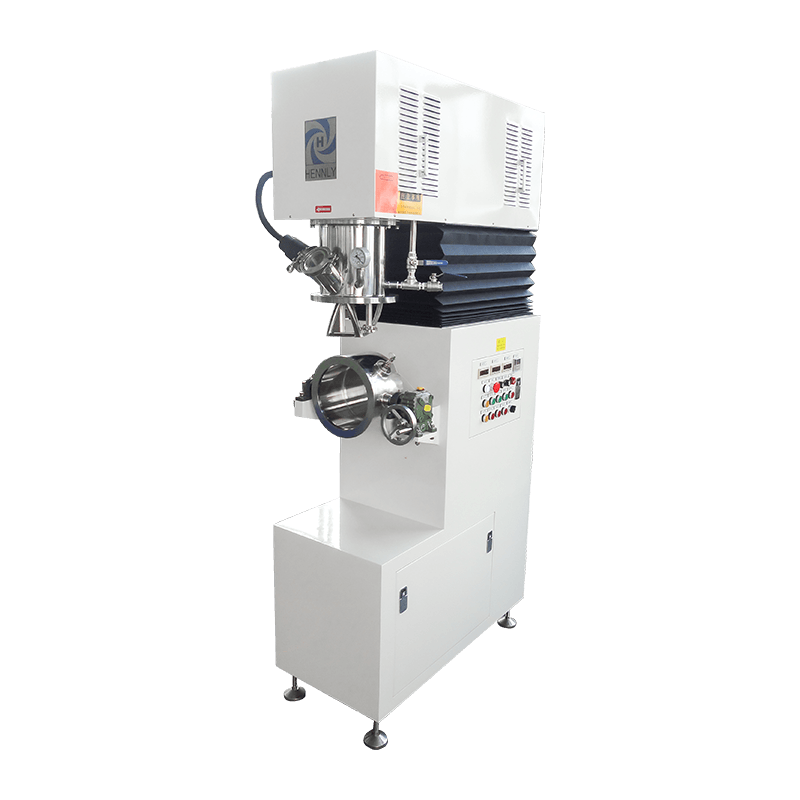
Feature: Small capacity, high hygiene level, high flexibility Lab Planetary Mixer is mainly used for customer’s pre-research. Above various types of m...
See Details
Feature: The number of blades can be customized The finger blades planetary mixer has stirring paddles composed of multiple blades, also called foldin...
See Details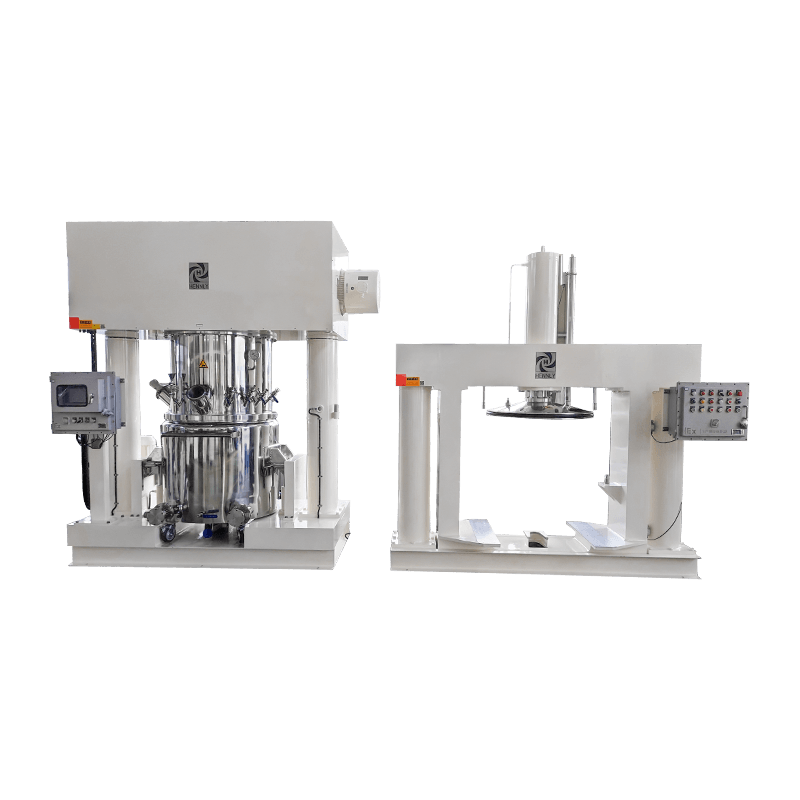
The claw blades planetary disperser is based on the claw-type double planetary mixer, with the addition of one or two high-speed dispersion units. Thi...
See Details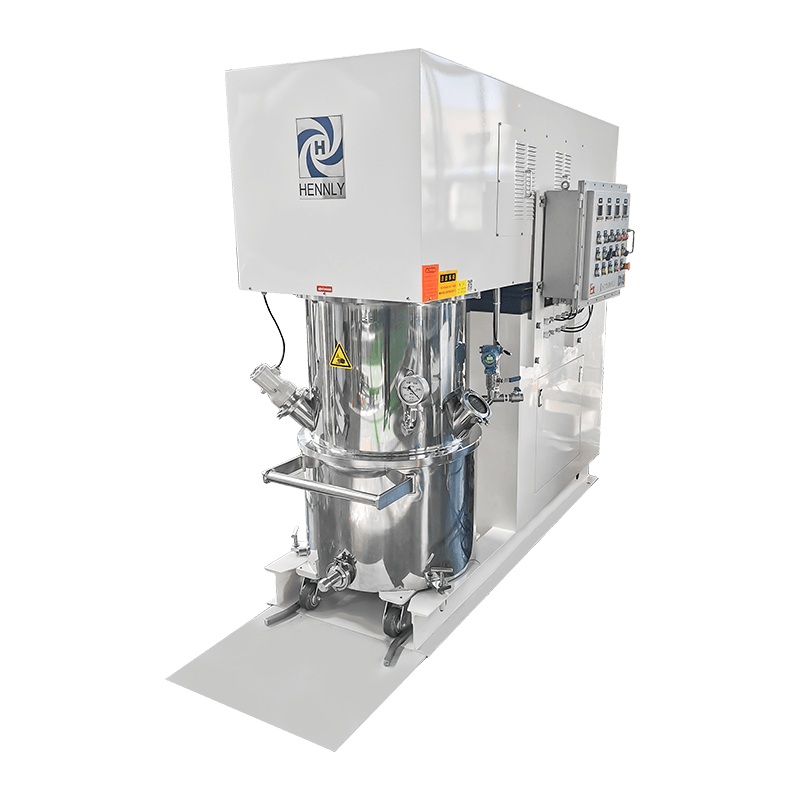
The triple planet is a kind of planetary mixer designed to solve the problem that viscous materials tend to cling to the paddles of traditional double...
See DetailsExperienced employees & experts are Always At Your Service to provide you with satisfactory products & professional instruction on technical problem solutions.

Add: No.36 Dragon Road, Technology Park, Qidong City, Jiangsu Province

Phone: +86-13806285652

Tel:+ 86-0513-83635488

Fax:+ 86-0513-83635488

E-mail: andyli@hennly.com